Wednesday, April 14, 2010

Dog and Cat Food


To change up a little from Human Food, I thought, since there was a request, I would speak some on the making of dog and cat food we do at our house. There are many books and articles and web pages out there on the making of dog and cat food and I encourage you to look and see what is good for you and your Furry Baby. What I am showing you is that, yes it can be done on a continuing basis and what we do.

We first started making the dog food when we got our St. Bernard, Loki Strong Heart. When he was a puppy he started immediately having some tummy issues which we proceded to make rice and ground beef for on bad days. Loki's tummy issues did not change for the better and eventually we were told he had food allergies and went on the hunt of what we could feed him that did not make him sick. Nothing seemed to help for long, almost everything did for a little while. To make a long story short we found the allergy to be to fleas and flea medicine and his problem to be more like IBS. This has been mostly fixed by adding 3 Tablespoons of homemade yogurt to each meal, which brought immediate and miraculous results.

Big dogs can easily have a problem with bloat. So it is important to feed them good food and food that is not dry. Hence, we still make dog food.

I have 2 very large crockpots, 7 qts each. In them I add 1/2 gal. of water and dashes of ground parsley, rosemary and cinnamon. Just dashes, very little. Do not add garlic. It has been found that in many dogs this can lead to a problem similar to lukemia.Then I add the chicken. We get boneless skinless thighs. This seems to be the best for your buck. Many people have told me to buy a whole chicken, but by the time you take out the bone, it is not cost effective per pound. We get 3lb frozen bags and I use approx. 1 1/2 bags for the 2 crockpots. I figure it 8 pieces of chicken in each crockpot, which, of course, is 16 meals. This lasts about 3 days, give or take. We are storing them in 31/2 cup containers, we have a big pup! But if you have a smaller dog you can cut the pieces in 1/2 or 1/4th and package accordingly. We also feed 4 times a day, so if you don't, yours will last longer.


I digress. Now add 1/2 of a 42oz container of oatmeal in each crockpot. Then add one can of green beans and one of peas to each crockpot also. Then fill each crockpot to the brim with water. I put my crocks on low and cook for 4 hours. Then as said, I put one piece of chicken in each 3 1/2 cup container and fill the rest of it with the soup part. We also feed our chow, Ming Fou with this same food. She is 70 pds and gets 1 1/2 cups each meal. Loki recieves 1 1/2 containers each meal.


Many people ask about other veggies and suppliments. Loki can't take hard veggies like carrots, some can. Go by one your pup can handle. Also I only supplement with a vitamin for each pup, each day and a Glocosamine pill for the St. Also because of dental issues we feed one of the 4 meals each day with a good hard dog food. We added this slowly, as we were not sure Loki could tolerate it with his stomach issues. But in time, he could, and we add yogurt to each of their dry dog meals, just as with the stew.


It took me quite awhile to find a homemade cat food that I was happy with. We have 8 inside cats and this really needed to be cost effective. I take the same crockpot filled 1/2 way with whey left over from the yogurt or water, and add one 1lb container of chicken livers. Cats need a lot more protein then pups and they need organ food, so regular chicken will not meat their needs. Then I add 1/4 of a container of 42 oz oatmeal and it cooks within about 2 hours on low. I give each cat a healthy tablespoon of the food each morning and follow up with dry food at nite for dental reasons also. I am closing in on making a hard cat food and and will let you know when I find a recipe I am happy with. I sometimes add the same spices for the cat food, but they do not seem to care. What they care more about is that the food is very "soupy". So just before I package it, I add more water, enough to make it very runny and then package.

Both of these foods freeze very nicely and will last about 1 week in the fridge. Also as a treat, we give the kitties homemade yogurt also. Never milk. But we have found that daily doses of yogurt for kitties, makes very round kitties. LOL!

Let me know how it goes and Bon Appetit to your Furry Babies!


Friday, April 2, 2010

Pysanki Eggs for Lent


I am a little late on this one. But better late than never, right?

Food mixed with traditions is always a fun thing to me. So we'll talk about the Ukranian Art of Pysanki. One reason that this tradition started is that people had chickens, but during Lent you were not supposed to eat eggs. But, the chickens really did not understand that, they kept laying eggs.

So with this art you need some dye (There is special dye you can order, but I have used homemade or even Paas dyes.), beeswax, a taper candle and an instrument to put the wax on, like drawing, which is called a kista.


You take a raw egg and with a pencil draw your design on the egg. There are many designs, you can look them up, and each has a meaning, or "wish" or prayer for the person you give the egg to. Then you decide on a first color and submerge your egg. It is important to do this similar to doing watercolors. Which means you go from light to dark. The last color that you use will be the actual color of the egg, and the color that gives your message.

So you have your design and the egg has been put in one color. Now, take your kitsta and fill it with some beeswax. Light your candle and run the kista back and forth in the flame, until the beeswax is melted. Now apply the beeswax to all the areas that you want to remain your first color. Example: You have your design on and you submerge your egg in yellow. Now all the places that you want to remail yellow you put wax on.

Now you continue to add color to your egg layer by layer. As you put your egg in each color you then add the beeswax each time to the areas that you wish to remain that color. The designs can be as intricate or simple as you choose.

By the time you are finished your egg should look almost completely like a mass of beeswax. The only part that is not colored is after the application of the last color. You can look up the traditional symbols and colors and thereby decide what you want your color scheme to be.
This takes a long time for the application of all the colors. When I did Pysanki on a regular basis, each egg would take about 3 - 6 hours depending on the intricacy. So be patient, this is not a "quick art".

Now comes the magical part. You take the egg and very gently pass it back and forth through the flame. You go a little at a time, not keeping the egg in the flame too much at one time, because you do not want it to scorch. As you pass parts of the egg back and forth in the flame you gently wipe off the now melted wax with a paper towel or soft rag. I prefer a sof rag.

You now see the vibrant colors now magically appear in their design. At the end it is good to very gently pass it through a little at a time and get the last slight film of wax off until all the colors look vibrant.

After allowing the egg to dry for at least a day you gently put a pin hole in the top and bottom of the egg. You put a little larger hole in the bottom. Gently shake your egg to break the yolk and now start to blow the egg out of the shell.

Some people wash the inside of the egg with many things. I think this is a little over the top and it is too easy to wash your colors off the egg. And if you have gotten this far without breaking the egg, my advice is to not push it.

The eggs were blessed at church and then distributed as gifts to family and to one's true love. Each egg with the design and color held a meaning - health, posperity, happiness, love.

If you are interested google and find the meanings to the symbols and colors or even better order a kit and make some yourself. This is not an expensive art form. They also make very nice Christmas gifts and ornaments.

There is a belief that as long as Pysanki remains being done in the world - goodness with outweigh evil. Let's help that along. Enjoy and let me know how your eggs look!

Saturday, March 27, 2010

Sourdough Bread


As I write these posts it has become clear to me, that what I really enjoy making is "live" food. Food that grows and ripens. So in that continuing theme today I will share my experiences with
Sourdough.

I discovered great Sourdough bread when my Mom and I used to travel to Alaska. And each year I would bring home "dry sourdough starter" and something was just not right. This recipe I am sharing today qualifies as great sourdough as far as I am concerned. And as you will see it is quite versitle.

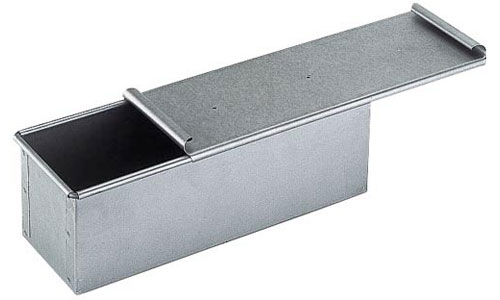
This originally is an artisan bread recipe. Which means it is baked on a stone or tiles. I was really excited about this - until - I realized that with my crutches, manuvering the bread and the stone was just too dangerous. I could just see myself falling face first into the oven. So I improvised and put it into a regular bread pan and it turns out just fine. Then I found a blog where a mom of 6 shared about a Pullman Bread Pan. This is a 6 sided bread pan w/sliding lid.


I used the Pullman Bread Pan for the first time today and it is wonderful. It makes a rectangular loaf of bread, so you can make your own "sliced bread" for about the price of 40 cents each. Not bad, huh? The pan itself though is incredibly expensive. So you have to watch amazon and ebay and get a good price. See how much they cost regularly first, (google them at retail), then you are able to decide a real bargain. It took me several weeks to find one that I thought was reasonable, so don't give up.

So I have made this bread 2 ways, a loaf and day slicing bread. Next week I shall try English Muffins with it, which I am sure I will blog about after. Let's get to the recipe so you can enjoy bread today.
Sourdough Starter:
Enough for 8 loaves in a bread pan (small pan) or equal 2 loves of slicing bread.
The equation to memorize is: 6-3-3-13-(1)
6 C Luke warm water, 4T Salt, 3T yeast, 3C Flour, & I add 1C homemade yogurt
Be sure and put the yeast in the luke water and let it marry for about 10 minutes & become bubbley, creamy, (small bubbles). This is a very moist dough. Fridging it makes it a little easier to deal with.
You let this rise is a bowl, I put the lid over it upside down. You want air to be able to get to it. It rises 2 - 5 hours and then refridgerates for for 3hours. Then you can bake 45 - 60 minutes at 350 degree oven.

Now - let's break this recipe down to smaller versions for rolls at dinner etc:

4 loaves (1 pullman slicing loaf) 3C Lukewarm Water, 1 1/2 T yeast, 1 1/2 T Salt 6 1/2 C Flour 1/2 c yogurt

2 Loaves (good for a couple nights of 6 rolls)
1 1/2 C Lukewarm water, 3/4 T yeast, 3/4 T salt, 3 1/4 C Flour, 1/4 C yogurt.

Let me know how it goes for you. I hope you enjoy this bread as much as we do.

Tuesday, March 23, 2010

Whey can be Way Cool


This is going to be a shorter post today, but still hopefully with enough information to add to your cooking experience. Loki, our St Bernard, is at the vet getting his dew claws cut and we are a little nervous and lonely around here. So bear with me and I think we can do cool things today.


Whey is that almost clear yellow liquid that comes off your yogurt and cheese. Do you remember when I had you save it? Why would we save it?, you must have asked. Because it can be used for a plithera of yummy foods. It is full of great things and can add a richness similar to butter in many foods.


One of the favorite uses for whey is a soup base. As a vegetarian I am always looking for a soup base that is a little more interesting than water and not as time consuming as making my own vegetable broth. This is it. By taking all the whey you have left over from your yogurt and cheese, adn putting it in a big pot you can make your favorite soup. If you don't have enough liquid for your soup, just add water to the whey. Do not worry that there is lemon juice or vinegar in it. It is pretty diluted and will mix well with the other ingredients. If your whey looks a little thick or a little "stringy" do not let it worry you. Remember we are dealing with live food here.


I also use whey when I make bread. Instead of adding water, I add the whey. Cakes, cookies, muffins - you get the idea. I especially like to use the whey when I make sourdough starter. This using a live food with a live food makes your "sourdough" richer and tastier.


I also have read that people use the whey as a drink. I have not tried this yet. From what I gather it is very cooling in the summer and comforting in the winter. Adopting this would help at my house since we usually have more whey than we do uses in one week. You can freeze whey also, but you have to remember that it takes a long long time for it to defrost. Take it out of the freezer the night before.


I hope you try some recipes with your whey. Let me know how they turned out. And I will try some as a drink - anyone else game?


Monday, March 22, 2010

Some Harder Cheese (But Not Hard to Do!)

Since yesterday I talked about the making of yogurt and also shared how it can can fixed in various degrees - almost liquid, creamy and spreadable - I thought today I would tell you about a harder cheese, that can also be made a couple consistancies.

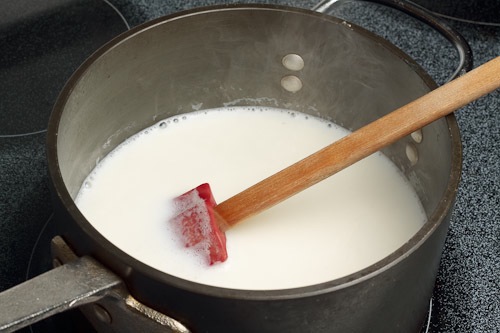
Again take a gallon of milk and while stirring constantly on high, let the milk come to a boil. This approximately takes 20 - 25 minutes. Have a collander ready lined with either a napkin or cheesecloth. Also a spoon that will drain will be used. Once the milk reaches a boil and starts to come up over the top of the pan, reduce the heat to about medium, or where it will manage to boil a little, but not make a mess. Now add lemon juice or apple cidar vinegar. Just spritz some in and watch the magic. Very quickly the curds and whey will start to separate. As the curds separate, gather them with your draining spoon and place them in the lined collander. You can add little more lemon juice or vinegar to make sure you can all the curds you can, I always do.

You can either use Whole or 2% milk here again. But, the more fat in it, the more curds. So with this cheese Whole Milk is usually the best. You also can add a cup to a cup and a half of Buttermilk to the milk and that also, when it boils will not only make fuller curds, but divides the curd and whey itself.

The addition of lemon juice, apple cidar vinegar and buttermilk is the addition of a rennet in your milk. All they do is divide the curd from the whey. There are many cheese making kits out there that sell a rennet. They are not inexpensive. With these 3, I find I can make all the cheese I need, with the occasional buying for special occasions.

Add salt to the curds right away. If there is any flavoring, in the way of spices, this is also the time to add it. Now you get to make some choices again. To just drain and leave it alone, this cheese is similar to "cottage cheese". You can also wrap the napkin around it tightly, squeeze and make a cheese ball. This will become a harder, more compact cheese, like the kind you would slice and put on a sandwich, but will not melt. Try both, they each have their uses.

Take the cheese ball out of the napkin/cheesecloth and store in a refrigerator container. It will not last more than about a week to 10 days. Remember there is no aging or preservative here, it is homemade. I find this cheese to be filling and I don't use as much at a time when putting on sandwiches, etc. So once again, you have a hefty amount of cheese for the price of a gallon of milk and a little lemon juice or vinegar.

Let me know how this goes for you! And save that whey again. We will use it tomorrow for the 1st time!

Sunday, March 21, 2010

Yogurt Musings and Recipe


We eat loads of yogurt at our house. All of us. Ron and I, the pups, the kitties. Loki the St. Bernard, has IBS, - yes, amazing isn't it? - and the only thing that really works is 3 heaping Tablespoons of yogurt with each of his 4 meals. The good thing is though, it really does work. Healthwise it is good for all of us and we love it. But have you looked at the store? Even the large economy containers are expensive if you are eating 1 - 2 gallons of yogurt a week. Which we do! With my recipe you make about 1 gallon of yogurt for the price of 1 gallon of milk - 1/4 at least, of the store bought cost.

So today I will share with you how I make both yogurt and Greek Yogurt. And in the next week, I will add, cheese, bread and soup. Why? Because they are all related in their ingredients, taking from one another. I love Food Science, and hope you will enjoy it too!

We don't use Yogurt Makers here. The ones I have seen, we would have to use them 3 times a day to get the quantity of yogurt we eat. I use a large pan that easily holds a gallon of milk. This is very important. Because if you use less milk with this method, it cools too quickly and doesn't actually make yogurt. And the milk, you can use Whole or 2%. Less than that does not give you as much yogurt and it is too watery.

Put your stove setting on high, we want to ALMOST boil the milk. This process is very meditative for me, enjoy it. While the milk is heating to 175 to 180 degrees, stir absolutely constantly. Watch the change in the milk's consistancy and color. In a short period of time of making yogurt regularly, you will be able to see the milk change and practically tell when it is ready by sight. In my pan, which is coated metal, it takes 15 minutes to get the milk to 175 degrees.

Now turn your stove off and let set until it is between 110 and 120 degrees. Again, mine take about 50 minutes, in a metal coated pan. Now the 1st time you make yogurt you need to buy regular, NEVER FLAVORED, yogurt. The luncheon size, what is it 6 - 8 oz? The first time, I use a lot of starter to insure thick creamy yogurt. After the initial batch, I use about 1/4 of a cup or if you want to use "freeze dried starter" from the health food store, 4 packets. (The starter in packets is really nice to have around for emergercy. You know, like you ate all the yogurt and forgot to keep some for starter.) Put the entire contents in the warm milk and stir well. Put your lid on and move the yogurt to a place where you will not disturb it. You will be putting the yogurt "to bed" now. We use a flannel sheet and cover the entire pan, with lid on. A wool blanket or winter coat will also work. The idea is that the yogurt needs to cool slowly. Often it is lukewarm still when we open it in the morning.

Let sit over night, or all day if you made it in the morning. And put it in refridgerator containers. I have found not to flavor the yogurt until you are ready to eat it. The yogurt will last longer without anything in it. Often you will see liquid lying on top or just under the surface. Just stir it in, it is whey folks.

NOW - GREEK YOGURT
Ron and I discovered Greek Yogurt in Florida and went nuts over it. We brought 1/2 a dozen containers back and actually thought of having it shipped to us. That's when I decided I could probably learn to make it. It is sooooo simple, you are allowed to giggle, ok?

Take that yogurt you just made. You can use cheesecloth, or I use a thin cloth napkin, and line a collander with it. Put this collander on top of a bowl. Spoon in yogurt and let it sit for 3 - 4 hours. The whey will drain into the collander, the yogurt becomes thick - which equals, Greek Yogurt! Refrigerate and enjoy.

Two things now. DO NOT THROW AWAY THE WHEY! Place it in a refrigerator container, we will use it later this week, often.
And if you continue to let the Greek Yogurt drain, you will have "cream cheese". I like to add Mexican or Italian or Indian seasoning and use as a sandwich spread or cracker dip.

Let me know how yours turn out! And later this week we will work with the whey in breads and soups and make another simple cheese.

Wednesday, March 17, 2010

HAPPY ST PAT'S DAY!


Funny Hats - check

Green cookies w/green icing - check

Planted Potatoes - check